The following post introduces our first series: Tadabbur of the Quran. It is an engaging way to reflect on the Qur’an and to heal and deepen our understanding. It draws on the remarkable work of Ustadh Fadel Suleiman, founder of the Bridges Foundation, which is available on YouTube in Arabic. On their channel, there are many playlists, a few in English and others in Arabic.
There is a playlist of Tadabbur (i.e., deep reflection and contemplation) for each Surah (i.e., chapter) of the Noble Qur’an. This was a project he started during the COVID-19 lockdown and continued for two years after. He began with Surah Yunus and was encouraged by his followers to continue on the path until he finished the entire Quran.
If you understand Arabic, this is a great resource for learning how to contemplate the Quran. He’s been a wealth of knowledge, and it’s been of great benefit to my family, especially in how we teach the Quran to our kids. I’m sure they’ll launch more series in English at some point, but for now I wanted to start sharing this one.
On YouTube, Ustadh Fadel has named this series the “Keys of Tadabbur.” The distinction of this title is important because it truly reflects the keys to opening our eyes to how we can look at the letters, words, and sentences of the Quran.
First, Tadabbur is not a scholarly interpretation (Tafsir); it is the process of pondering the meaning, wisdom, and application of the words of Allah (Subhanahu wa Ta’ala). This series demonstrates how to perform Tadabbur, which extends beyond recitation and even memorization. It allows us to pause, think, appreciate, learn, and internalize the lessons. Second, the series explains how to use context, sentence formation, and other methods to understand the revelation more simply while building a closer relationship with the Quran.
Let’s start with (بسم الله الرحمن الرحيم) In the name of Allah, the most gracious, the most merciful.
All praise is due to Allah, Lord of all universes. May peace and blessings be upon our Prophet and Messenger, Muhammad, and upon his family and companions.
Dua’a: “O Allah, teach us what benefits us, benefit us with what You have taught us, and increase us in knowledge.” (“اللهم علمنا ما ينفعنا وانفعنا بما علمتنا وزدنا علما)
Ustadh Fadel Suleiman recounts a true story about someone he knows:
This person went to an ear doctor, complaining of ear pain. After examining him, the doctor diagnosed him with an inflammation in the middle ear. He then prescribed an anti-inflammatory medication to be taken orally, one pill every six hours.
Two days later, the patient returned in severe pain—worse than before—and reported that there had been no improvement at all, despite taking the medication regularly for two days. The physician instructed him to continue the medication for at least five days to observe effects. At that point, the patient shouted that he absolutely could not even take a single pill anymore.
When the doctor asked why, the patient showed him that his ear could not fit any more pills, and it’s been extremely painful! It became clear that the patient had been taking the medicine incorrectly—he had been placing the pill inside his ear!
It turns out, that the medicine did not work because it was being used in the wrong way.
In the same way, the Noble Qur’an is a healing and a mercy for all humanity. Allah (Subhanahu wa Ta’ala) says in Surah 17: Al-Isrā’:
وَنُنَزِّلُ مِنَ ٱلْقُرْءَانِ مَا هُوَ شِفَآءٌۭ وَرَحْمَةٌۭ لِّلْمُؤْمِنِينَ ۙ وَلَا يَزِيدُ ٱلظَّـٰلِمِينَ إِلَّا خَسَارًۭا

We send down the Quran as a healing and mercy for the believers, but it only increases the wrongdoers in loss. [Al-Isrā’: 82]
Ustadh Fadel reminds us, through the Ayah (i.e., sign)1, that the Qur’an is a cure for the diseases of the heart: resentment, envy, hatred, anger, boredom, and many other inner illnesses.
Allah (Subhanahu wa Ta’ala) says in Surah 10: Yūnus:
يَـٰٓأَيُّهَا ٱلنَّاسُ قَدْ جَآءَتْكُم مَّوْعِظَةٌۭ مِّن رَّبِّكُمْ وَشِفَآءٌۭ لِّمَا فِى ٱلصُّدُورِ وَهُدًۭى وَرَحْمَةٌۭ لِّلْمُؤْمِنِينَ

O humanity! Indeed, there has come to you a warning from your Lord, a cure for what is in the hearts, a guide, and a mercy for the believers. [Yūnus: 57]
Yet we are always in a hurry to read the Qur’an just to increase our good deeds and even to memorize it, while these diseases remain unchanged, unhealed, and still present in our hearts.
So, where is the problem? Where does the mistake lie?
He states that the mistake lies in reading the Qur’an without understanding it. Ustadh Fadel sadly yet confidently says that the most-read book without understanding is the greatest of all—the Noble Qur’an.
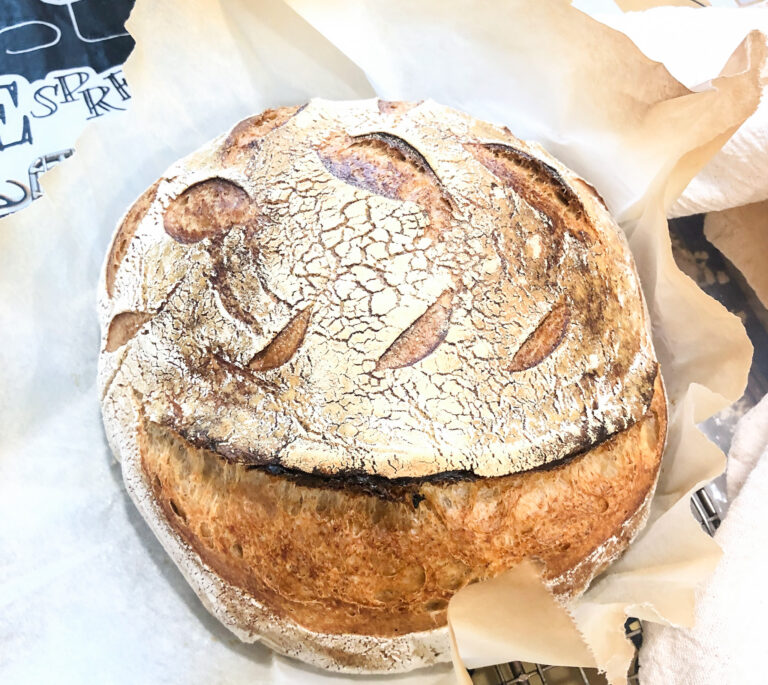
The medicine did not work because it was being used the wrong way
the ear infection story, Ustadh Fadel Suleiman
Ustadh Fadel cites the Ayah in the Qur’an in which the Messenger, Muhammad ﷺ, complained about his people not because they had abandoned reciting the Qur’an, but because they treated it as something abandoned in practice.
The following Ayah is in Surah 25: Al-Furqān:
وَقالَ الرَّسولُ يا رَبِّ إِنَّ قَومِي اتَّخَذوا هذَا القُرآنَ مَهجورًا

The Messenger has cried, “O my Lord! My people have indeed received this Quran with neglect.” [Al-Furqān: 30]
Ustadh Fadel notes that, unfortunately, Muslims recite the Qur’an, organize competitions, gatherings, and events around its recitation and memorization—but they have abandoned it in terms of learning, application, and reflection.
Ustadh Fadel points us to the fact that the Qur’an is an inexhaustible source of meaning. Every time you recite it, you discover something that was previously hidden. And the more you return to it, the more layers of meaning unfold. This is why we are called to read the Qur’an with tadabbur—deep reflection—so that we may truly understand it, for it is a Book sent down to all of humanity from the heavens.
Allah (Subhanahu wa Ta’ala) says in Surah 38: Ṣād:
كِتابٌ أَنزَلناهُ إِلَيكَ مُبارَكٌ لِيَدَّبَّروا آياتِهِ وَلِيَتَذَكَّرَ أُولُو الأَلبابِ

˹This is˺ a blessed Book which We have revealed to you ˹O Prophet˺ so that they may contemplate its verses, and people of reason may be mindful. [Ṣād: 29]
We are reminded that “the Qur’an is not merely words written on pages. It is a spirit that enters a lifeless heart and brings it back to life. We are meant to read this Book so that our hearts may live—without boredom, weariness, or the illnesses of the heart.”
Allah (Subhanahu wa Ta’ala) says in Surah 42: Ash-Shūrā:
وَكَذلِكَ أَوحَينا إِلَيكَ روحًا مِن أَمرِنا ما كُنتَ تَدري مَا الكِتابُ وَلَا الإيمانُ وَلكِن جَعَلناهُ نورًا نَهدي بِهِ مَن نَشاءُ مِن عِبادِنا وَإِنَّكَ لَتَهدي إِلى صِراطٍ مُستَقيمٍ

And so We have sent to you ˹O Prophet˺ a revelation by Our command. You did not know of ˹this˺ Book and faith ˹before˺. But We have made it a light, by which We guide whoever We will of Our servants. And you are truly leading ˹all˺ to the Straight Path. [Ash-Shūrā: 52]
To reinforce, Tadabbur is different from tafsir. We are commanded to read the Qur’an with reflection, using tafsir as a tool to help us think deeply and contemplate the verses calmly—considering their meanings, their outcomes, and how they reflect in our daily lives.
One of the most important aspects of tadabbur is the discovery of the Qur’an’s messages, drawing closer to Allah, and strengthening faith—not the extraction of rulings on halal and haram or the elaboration of detailed jurisprudential laws. These matters belong to the scholars of fiqh and specialized knowledge, who derive rulings from the Qur’an, Sunnah, consensus, and analogy.
With the help and blessing of Allah, we begin this journey with Ustadh Fadel Suleiman and the Noble Qur’an.
Dua’a: “O Allah, teach us what benefits us, benefit us with what You have taught us, and increase us in knowledge. Show us the truth as truth and grant us the ability to follow it, and show us falsehood as falsehood and grant us the ability to avoid it.“
All the topics mentioned in this section were taken from a video by Ustadh Fadel Suleiman. The link to the episode is here: Keys of Tadabbur.
Check out the Start Here post to learn more about our content.
- Ayah: Means “sign” in Arabic. Through this series, it will be used in place of a verse as each one is a “sign” from Allah (Subhanahu wa Ta’ala) that guides us in the right path. ↩︎